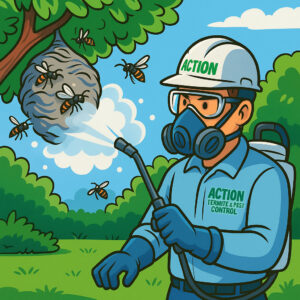
Every spring in New Jersey, homeowners begin seeing large bees hovering around decks, railings, and rooflines. While they may look like harmless bumblebees, these insects are often carpenter bees, a common spring pest that can cause serious damage to wooden structures around your home.
Carpenter bees become active as temperatures rise, typically appearing in March and April throughout New Jersey. If left untreated, they can drill tunnels into wood, weaken structures, and return year after year to expand their nests.
Understanding how carpenter bees affect NJ homes—and how to stop them early—can save homeowners from costly repairs.
What Are Carpenter Bees?
Carpenter bees are large bees that resemble bumblebees but have a shiny black abdomen instead of a fuzzy one. Unlike honeybees, carpenter bees do not live in hives. Instead, they are solitary insects that nest inside wood.
Female carpenter bees drill perfectly round holes in wood and create tunnels where they lay eggs. Each tunnel contains several chambers for developing larvae.
Over time, these tunnels expand and can significantly weaken wooden structures.
Why Carpenter Bees Are a Problem for NJ Homes
Many homes in New Jersey have wooden decks, trim, fascia boards, and railings, which makes them attractive nesting sites for carpenter bees.
Common areas carpenter bees target include:
-
Decks and pergolas
-
Porch ceilings
-
Wooden railings
-
Fascia boards and roofline trim
-
Wooden siding
-
Outdoor furniture
Each hole may only be about ½ inch wide, but the tunnels inside can extend several inches or even feet through the wood.
When multiple bees return to the same area every year, damage can quickly become severe.
Signs of Carpenter Bees Around Your Home
New Jersey homeowners should watch for these common signs of carpenter bee activity:
Large Bees Hovering Around Wood
Male carpenter bees often hover aggressively around decks and entryways. While intimidating, males cannot sting.
Perfectly Round Holes in Wood
Carpenter bees create small circular holes in wood surfaces.
Sawdust Underneath Holes
As bees drill into wood, they leave behind small piles of sawdust called frass.
Yellow or Brown Stains
Bee waste may leave stains near entry holes.
Woodpecker Damage
Woodpeckers often attack carpenter bee nests to reach larvae, causing even larger holes in the wood.
Are Carpenter Bees Dangerous?
Carpenter bees may appear aggressive, but they rarely sting people.
-
Male carpenter bees cannot sting
-
Females only sting if directly handled or threatened
For most homeowners, the real concern is property damage, not personal safety.
Why Carpenter Bees Return Every Year
One of the biggest problems with carpenter bees is that they reuse nesting sites year after year.
Old tunnels attract new bees, which expand existing galleries and create additional nests nearby. Over time, this can lead to:
-
Structural weakening of decks and trim
-
Increased bee populations each spring
-
Higher repair costs
That’s why early treatment in the spring is critical.
How to Prevent Carpenter Bees in New Jersey
There are several ways homeowners can reduce the risk of carpenter bee infestations.
Paint or Seal Exposed Wood
Carpenter bees prefer untreated or weathered wood. Painting or sealing wood makes it less attractive for nesting.
Repair Old Holes
Filling and sealing previous nesting holes prevents bees from reusing them.
Maintain Decks and Trim
Regular maintenance helps eliminate soft or damaged wood where bees prefer to drill.
Professional Carpenter Bee Treatment
Professional pest control treatments can eliminate active bees and prevent them from returning.
Professional Carpenter Bee Control in New Jersey
If you are seeing carpenter bees around your home, it’s best to act early before the infestation spreads.
Professional carpenter bee treatments can:
-
Eliminate active nests
-
Prevent bees from returning
-
Protect decks, siding, and rooflines
-
Stop long-term structural damage
Early spring is the best time for treatment, before new generations develop.
Protect Your NJ Home From Carpenter Bees This Spring
Carpenter bees are a common spring pest across New Jersey, but with early detection and proper treatment, homeowners can prevent serious damage.
If you’re seeing carpenter bees around your deck, roofline, or siding, it may already be time to take action.
Schedule a professional carpenter bee inspection today to protect your home before the damage gets worse.